
Piquancy is a strong flavor that stimulating to the palate in the tongue. Unlike acid, sweet and salty flavors, piquancy is more likely a feeling of pain. The capsaicin in cayenne pepper stimulates the connective tissues in the tongue, generating a sharp signal to the brain. Spicy food occurs broadly in Asia cuisine. One important reason is the hot and humid weather. For instance, people in Sichuan and Hunan advocate eating spicy dishes in the damp climate. Both areas experience a humid subtropical climate, with humid summers, wet winters, and mass rainfalls. Sichuan has the lowest sunshine totals in China, and it has mild but moist summers. Hunan has a hot summer; the July temperatures average is above 27 ℃ (81 ℉) (Wiki, 2018). People in the area believe the spicy food help them to clean “moisture” in the body, and they get used to eating it daily. Furthermore, Thailand is also influenced by monsoon winds, and it experiences a long rainy season. Local people eat spicy food a lot.
Apparently, the climate is not the only reason for the popularity of spicy food. People enjoy not only the intense flavor and its simulation in the tongue but also amazed by its unbeatable taste. People are driven by the feeling generated by capsaicin, spices, and seasoning. Cooks in Sichuan use dried chili with white sesame, rapeseed oil, octagonal, fragrant leaves, bay leaves, pepper, ginger, and salt. The spices soft the sharp burning seasoning caused by capsaicin, adding more flavor for dishes. In Sichuan cuisine, I recommend boiled fish slices. The raw fish meat is cut into slices and covered by starch to keep its tenderness. It is poached in boiling water for 30 seconds; time varies based on species of fish. The drained fish slice is put on sliced cabbage and bean sprouts, with spices. The final step is to heat vegetable oil and pour over the dish. The hot oil weak capsaicin’s painful effect, but arouse the hiding taste of spices. The oil also combines the fish with spicy flavor and numbing sensation. The boiled fish slices is available in Hunan Bar and Sichuan Gourmet (Oakland).
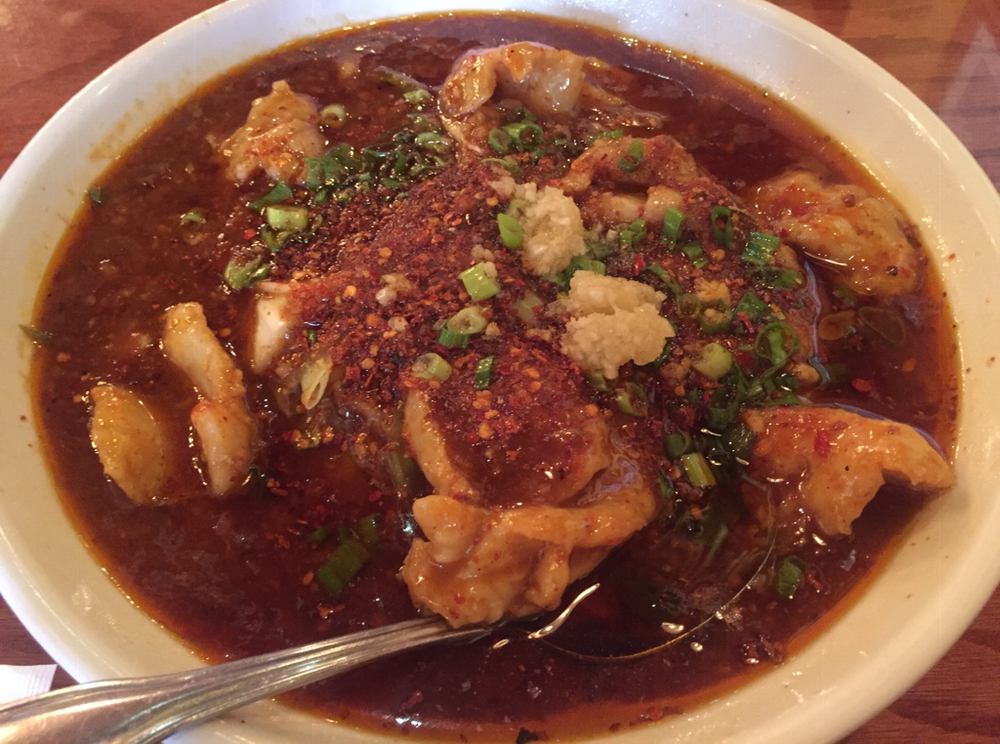
One friendly tip: not everyone enjoys spicy food. Spicy food is delicious when the level of spicy is within one’s tolerance. If the spicy level is out of one’s tolerance, eating the dish becomes an unfriendly experience. In this situation, drinking milk or ice water could relieve pain in the tongue. If the spicy level is too high, the diner might start sweating, feel dizzy, or suffer gastric discomfort. Eating spicy food should be an enjoyable experience, so please do not eat food in unbearable spicy level.
References
Wiki. (2018, September 20). Hunan. Retrieved from Wikipedia: https://en.wikipedia.org/wiki/Hunan
 Panther Eats
Really interesting, I’ll have to try it!
LikeLike
Thank you for the comment! Hope you will like it.
LikeLike
As someone who has recently developed an affinity for spicy food, I loved reading this post. I enjoyed learning about the the connection of the weather to the reason for eating spicy food; very interesting! The dish you recommended sounds good but I am worried it might be too spicy for me. I only like very mild spice!
LikeLike
Thank you for the comment. Yes, you could require the spicy level as mild. Chili is a common spice to cover the unpleased taste of meat, and it also improves the flavor of a dish. For instance, there are paprika, garlic, shallot, and other spices in boiled fish slices. Spicy is like Icing on the cake, just pick the level you like. Personally, I don’t think too spicy food is good. It’s just a torture.
LikeLike